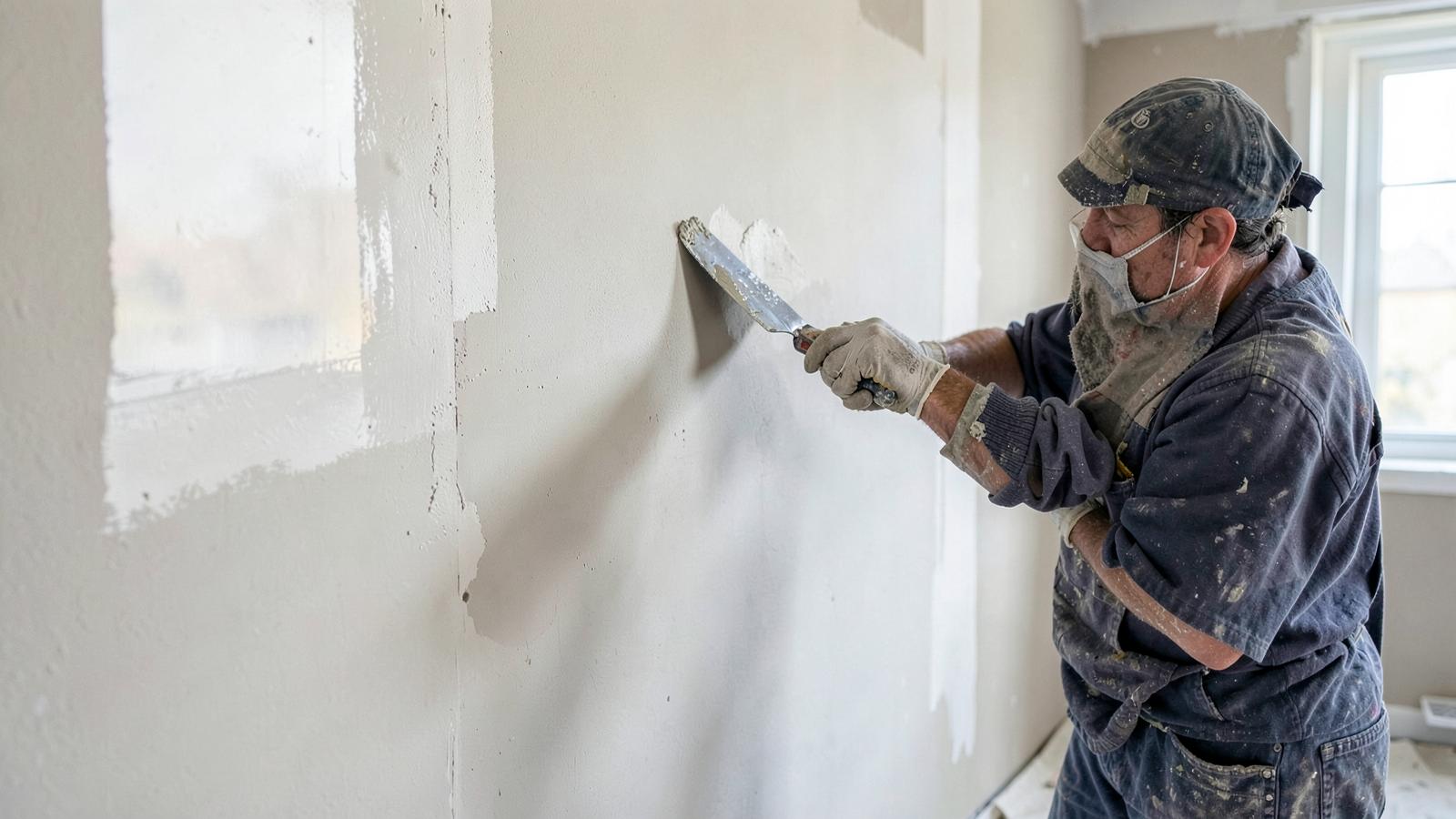
Most disagreements about drywall quality are really disagreements about which finish was being paid for. The trade has a scale for exactly this, running from Level 0 to Level 5, and it describes how much taping and coating a surface has had. Naming a level up front is the difference between hoping for a standard and specifying one.
Level 0 means nothing has been done — board hung, no tape. It is a temporary state, or a surface nobody will ever see. Level 1 is tape embedded in compound at the joints, with no particular concern for finish. It is what belongs above a suspended ceiling or inside a service void, where the requirement is fire and smoke performance rather than looks.
Level 2 adds a coat over the tape and the fasteners, wiped down. This is for garages, storage spaces, and any wall that is about to disappear behind tile — there is no point polishing a surface that is going to be covered in adhesive. Level 3 adds another coat. It suits heavy textures, and it is not intended to be painted flat.
Level 4 is the one most people actually mean when they say a room is finished. Tape coat plus two separate coats over joints and fasteners, sanded smooth. It is the normal residential standard for flat paint and light textures, and for the great majority of rooms it is the right answer.
Level 5 adds a thin skim coat across the entire surface, not just the joints. That sounds like a small addition and it is not: it makes the whole wall one uniform material, which is what stops joints flashing under gloss paint or under light that rakes along the surface. It is the level worth asking about for a hallway, a stairwell, a wall with a window at one end, or any room where the lighting washes down the walls.
None of this makes a higher level automatically better. A Level 5 garage is money spent on something nobody will look at, and a Level 4 wall opposite a big south-facing window can disappoint someone who was picturing glass. The useful move is to decide the level per room, based on the light and the paint sheen that room is getting, and to say so before the work starts rather than after.