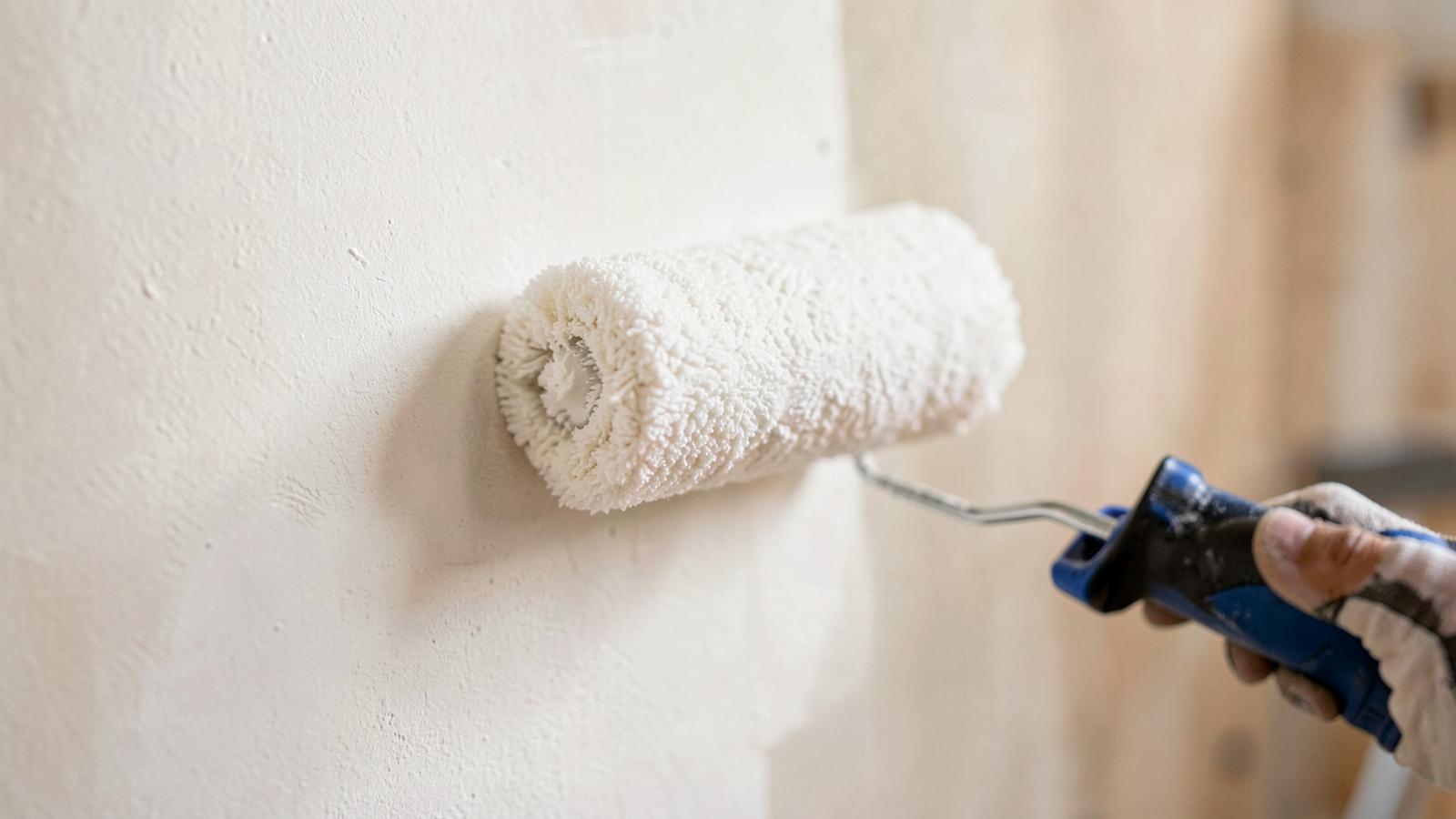
A freshly finished wall looks like one surface. It is not. It is two materials sitting side by side: the paper facing of the board, and the joint compound over every seam, corner and screw head. They look identical under work light and they behave completely differently the moment they get wet.
Joint compound is porous and thirsty. Paper facing is comparatively sealed. Roll a topcoat straight onto that and the compound pulls the liquid out of the paint faster than the paper does, so the two dry to different sheens. The wall is evenly coloured and unevenly shiny, and every joint reappears as a dull stripe the first time light runs along it. Painters call it flashing, and no amount of extra colour coats reliably fixes it, because each new coat meets the same uneven suction underneath.
The fix is a primer whose actual job is to equalise that suction rather than to add colour. A drywall sealer soaks into the compound, sits on the paper, and leaves one uniform surface for the topcoat to meet. After it, the paint dries at the same rate everywhere, and the joints stop existing as far as the eye is concerned.
Two things worth knowing beyond that. First, skipping the primer rarely saves a coat — you generally spend it anyway chasing an even finish, and you end up with a worse result for the same labour. Second, if a wall has been skim coated for a high-sheen paint or for a room with strong raking light, it is worth asking for a high-build primer, which fills the last of the sanding scratches instead of settling into them.
The short version: the primer is not the optional step before the real paint. On new board it is the step that decides what the real paint looks like.