A patch that reappears under fresh paint is one of the most frustrating results in the trade, mostly because everything looked fine right up until the last step. It is nearly always one of four things, and all four are decided before the brush comes out.
The first is width. Compound has to be feathered out far enough that the transition from filled to original wall is too gradual for the eye to catch. A repair blended over a few inches leaves a detectable hump no matter how smooth it is; the same repair blended out a foot or more in each direction disappears. Most patches that show were finished too narrow, not too rough.
The second is porosity, and it is the one people miss. Joint compound drinks liquid far faster than the paper facing around it. Paint over both without sealing them first and the two dry to different sheens, so the repair reads as a dull shape even though the colour matches perfectly. This is why a patch can be invisible while the paint is wet and obvious an hour later. A primer over the repaired area — extending well past the compound — is what evens it out.
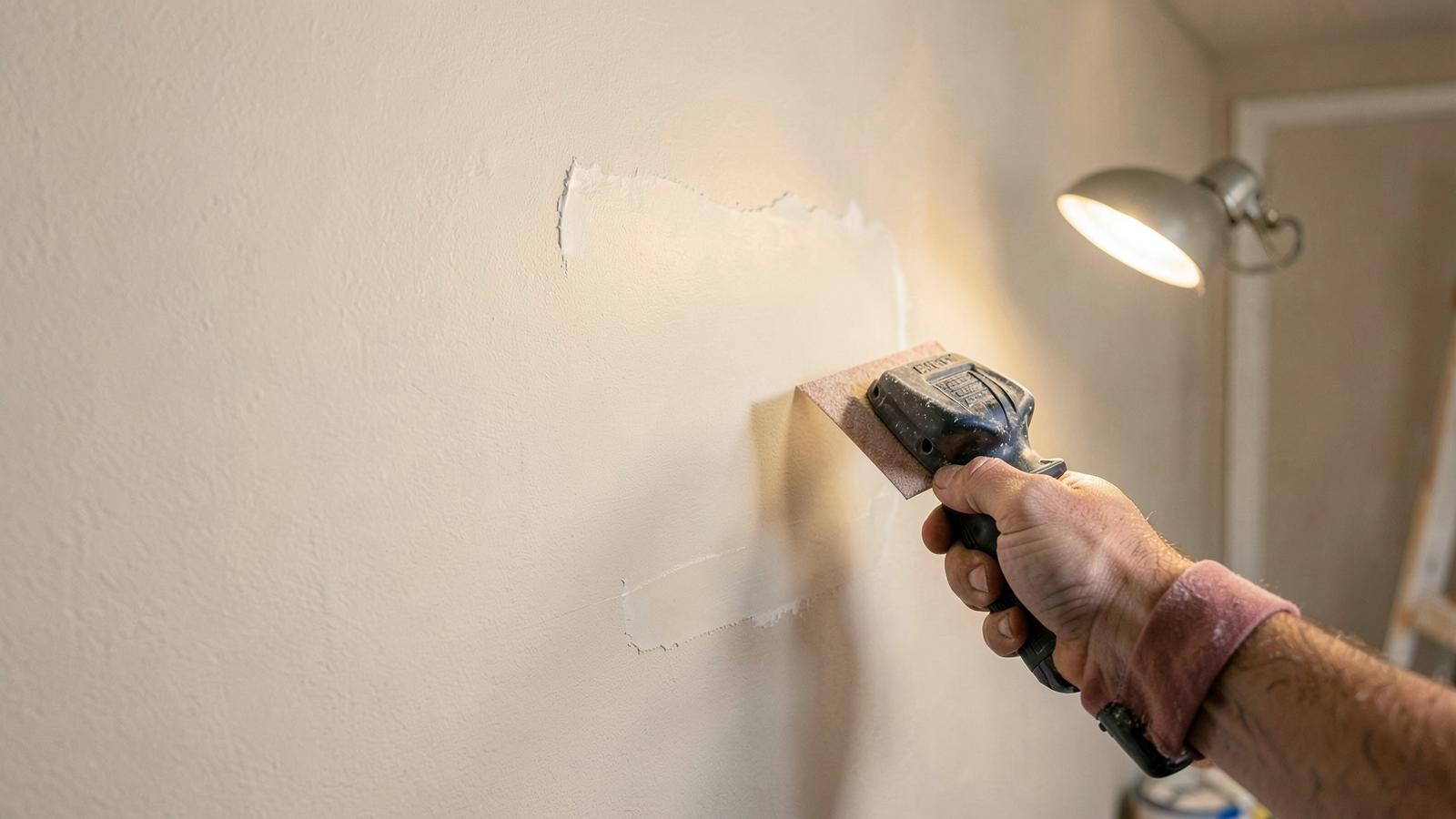
The third is sanding damage. Aggressive sanding scuffs the paper facing around the patch, raising its fibres. Those fuzzed areas then absorb paint differently and can look faintly rough even after painting. Lighter grit, less pressure, and staying off the surrounding paper is the answer; where it has already happened, a coat of primer will lay the fibres back down.
The fourth is simply looking at it wrong. Almost nobody checks a repair the way a room will actually be seen. Before painting, hold a light close to the wall and shine it along the surface rather than at it. Every high spot and every edge that has not been feathered enough will throw a shadow immediately. It takes seconds, and it is the difference between finding the problem while it is still easy to fix and finding it after two coats of colour.
None of this is exotic. It is width, sealing, gentleness and one honest look under raking light — and getting all four right is most of what separates a repair you can find from one you cannot.